
Many people wonder whether SPF is really necessary every day if they are not planning to spend hours at the beach or by the pool. The answer is clear: UV exposure can still affect the skin even on cloudy days and during everyday moments such as sitting near a window or driving. SPF is not just a seasonal add-on to your routine, but one of the most important daily steps for healthier-looking skin. In this article, you will learn why sun protection matters, which types of SPF exist, and how to use it correctly for the best results.
Contents
- Why SPF is a key step in skincare
- Types of SPF: chemical, mineral and hybrid – what to choose?
- How to use SPF correctly in every skincare routine
- SPF and antioxidants: how they work together
- A practical perspective: why SPF is often skipped and what actually helps
- Discovering natural SPF solutions with La PIEL
- Frequently asked questions
Key takeaways
| Point | Details |
|---|---|
| SPF is a daily must-have | UV protection matters throughout the year, not only during summer. |
| Choose SPF according to your skin type | Understanding the differences between SPF types makes it easier to find the right product. |
| Correct application matters | SPF should be applied as the final step of the morning routine and reapplied when needed. |
| SPF + antioxidants for stronger support | Combining SPF with antioxidants and carefully chosen skincare ingredients helps support the skin on several levels. |
Why SPF is a key step in skincare
Once we understand that SPF is not reserved only for summer, it becomes easier to see why it deserves a permanent place in a skincare routine. Understanding how UV exposure affects the skin helps you treat SPF not as an optional step, but as a daily habit that supports both skin health and appearance.
UV radiation is usually divided into two main types that affect the skin. UVB rays are mainly associated with sunburn and visible redness, while UVA rays penetrate deeper into the skin and are strongly linked to premature signs of ageing, loss of elasticity and uneven skin tone. What is especially important to know is that UVA rays can pass through ordinary window glass, which means that driving or working near a window can still contribute to cumulative skin exposure.
Regular SPF use offers several important benefits:
- Helps reduce the risk of UV-related skin damage: Consistent sun protection is one of the most important habits for reducing UV-related skin risk over time.
- Helps prevent premature signs of ageing: UV exposure is one of the leading external contributors to visible ageing, including fine lines, loss of firmness and uneven tone.
- Helps protect against hyperpigmentation: Regular protection helps reduce the deepening of dark spots and supports a more even-looking complexion.
- Helps preserve the results of your routine: If you use retinol, vitamin C, acids or peptides, SPF helps protect the skin and supports the long-term results of those active ingredients.
“Sun protection is not only an aesthetic step, but a foundation of responsible skincare that pays off every day, regardless of the season.”
It is important to remember that SPF is not only a summer habit. In winter, the UV index is usually lower, but UVA exposure can still be present, especially through clouds, reflections and windows. If you spend time indoors near a window, your skin can still receive a level of exposure that accumulates over time. That is why the best SPF products should be part of your morning routine throughout the year.

When including SPF in your routine becomes a daily habit, the benefits become easier to notice over time. Skin can look more even, dark spots are less likely to deepen, and the overall texture can appear smoother. SPF is not only protection — it is an investment in the long-term look and comfort of your skin.
Types of SPF: chemical, mineral and hybrid – what to choose?
Now that we know why SPF matters, it is important to understand which types exist and how to choose the best one for your skin. The market offers many options, and knowing the difference between chemical, mineral and hybrid SPF can help you make a better choice.
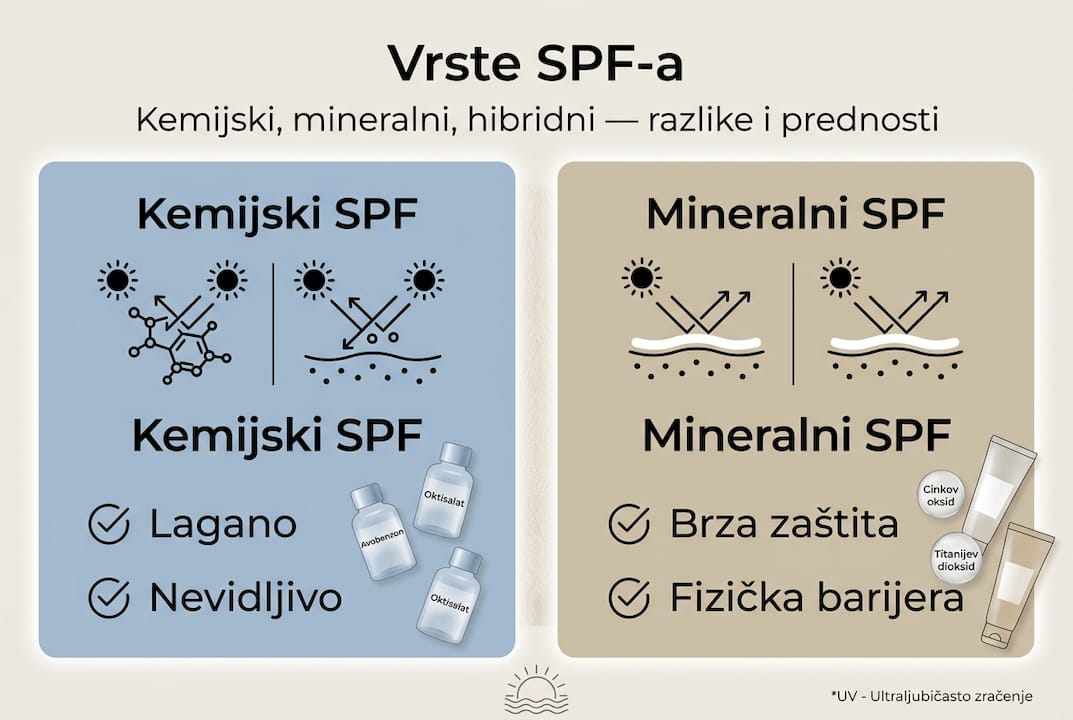
Chemical SPF primarily absorbs UV energy, while mineral SPF uses filters that help reflect, scatter and absorb UV rays on the skin’s surface. This basic difference affects how each type feels, looks and works in a routine.
| Type of SPF | How it works | Advantages | Possible downsides | Recommended for |
|---|---|---|---|---|
| Chemical | Absorbs UV energy | Lightweight, usually invisible on skin | May be less suitable for very reactive skin | Oily and combination skin |
| Mineral | Uses mineral filters such as zinc oxide or titanium dioxide | Often well tolerated by sensitive skin | Can leave a white cast | Sensitive and dry skin |
| Hybrid | Combines both types of filters | Balanced feel and finish | Formulas vary greatly | Most skin types |
Chemical SPF contains UV filters such as avobenzone, octocrylene or other approved sunscreen filters. Its advantage is usually a lighter, more invisible texture that layers well under makeup. However, some sensitive or reactive skin types may prefer a different option.
Mineral SPF uses zinc oxide or titanium dioxide as active filters. It is often a good choice for sensitive, reactive or acne-prone skin. The main downside can be a white cast, especially on deeper skin tones, although modern formulas are much more elegant than older mineral sunscreens.
Hybrid SPF combines the benefits of both types, while tinted mineral SPF options can be especially practical because they help reduce the appearance of white cast and provide a more even-looking finish.
How to choose the right SPF for your skin:
- Sensitive skin: Look for mineral filters such as zinc oxide, and choose formulas without unnecessary fragrance.
- Oily skin: Choose a chemical or hybrid SPF with a lightweight, matte or gel-cream texture.
- Dry skin: Look for SPF formulas that also contain hyaluronic acid, glycerin or nourishing emollients.
- Deeper skin tones: A tinted mineral SPF can give a more elegant finish without a visible white cast.
Professional tip: If you are not sure which type to choose, start with a mineral SPF example and observe how your skin reacts after several days of use.
There is no single SPF that suits everyone. The key is to test the texture, follow your skin’s reaction and adjust your choice according to the season. In winter, you may prefer a richer formula, while in summer a lighter texture may feel more comfortable.
How to use SPF correctly in every skincare routine
Once you have chosen the ideal type of product, correct application is essential. Even the best SPF will not offer the expected level of protection if it is applied in the wrong step of the routine or in too small an amount.
SPF should be applied as the last step of the morning routine, after serum and moisturiser, and it is recommended daily, including days when you are mostly indoors or when it is winter. One of the most common mistakes is applying SPF underneath a face cream or mixing it directly with another cream, which can dilute the formula and reduce its performance.
The correct order in a morning routine:
- Cleanse with a gentle gel, foam or cream cleanser
- Toner to help balance the skin, if you use one
- Serum with active ingredients such as vitamin C, hyaluronic acid or peptides
- Moisturiser suited to your skin type
- SPF as the final step, applied to clean, hydrated skin
The amount of SPF matters just as much as the product itself. A common recommendation for the face is around a quarter teaspoon, or the two-finger rule. Many people apply far less than needed, which means the actual protection on the skin may be lower than the SPF number stated on the packaging.
If you are exposed to direct sun, reapply SPF every two hours. Practical options such as SPF sprays or powders with UV filters can help refresh protection during the day without disturbing makeup too much.
Professional tip: Place your SPF next to your toothbrush as a visual reminder. This small trick helps build the habit because you see it every morning at the same time.
Do not forget that winter skincare protection is still important. Although UV intensity can be lower in colder months, daily exposure can still add up, especially when you spend time near windows or outdoors. If you follow anti-age routines and use active ingredients such as retinol, SPF becomes even more important because retinoids can make the skin more sensitive to the sun.
Another common mistake is forgetting the neck, décolletage and hands. These areas show signs of ageing just as quickly as the face, yet they are often left out of the protection step.
SPF and antioxidants: how they work together
Alongside correct SPF use, additional benefits can come from combining sun protection with antioxidants and carefully chosen natural ingredients. This is not just a marketing idea — it is a smart skincare strategy that supports the skin on multiple levels.
The combination of SPF and antioxidants helps support better protection against environmental stress. Antioxidants neutralise free radicals that can be generated by UV exposure and pollution, while SPF helps reduce UV impact on the skin. No SPF blocks 100% of UV rays, so antioxidants can be a useful supporting step.
The most important antioxidants and natural ingredients that work well alongside SPF:
- Vitamin C: A powerful antioxidant that helps neutralise free radicals, supports a more even-looking tone and contributes to collagen synthesis. It is often used in the morning under SPF.
- Vitamin E: Works well with vitamin C and helps support the lipid layer of the skin.
- Niacinamide: Helps strengthen the skin barrier, reduce the look of redness and support skin resilience.
- Green tea extract: Rich in polyphenols that help reduce oxidative stress and support calmer-looking skin.
- Pomegranate oil: A natural antioxidant-rich ingredient that supports the feeling of nourishment and skin comfort.
| Ingredient | Role alongside SPF | Where to find it |
|---|---|---|
| Vitamin C | Helps neutralise free radicals | Serums, face creams |
| Vitamin E | Supports the skin’s lipid layer | Oils, richer moisturisers |
| Niacinamide | Helps strengthen the barrier | Serums, lightweight creams |
| Green tea extract | Helps calm the look of skin | Toners, serums |
Understanding the role of antioxidants helps you create a routine that does more than simply protect. It also supports the skin’s overall appearance, comfort and resilience. If you are interested in natural ingredients for healthy-looking skin, look for formulas that combine botanical extracts with a well-rounded daily routine.
When reading ingredient lists, look for active antioxidants within the first part of the INCI list, as this usually suggests a more meaningful presence in the formula. If they are listed only at the very end, their concentration may be lower. For practical tips for softening the look of wrinkles and supporting an anti-age routine, vitamin C in the morning with SPF and retinol at night is often considered a strong skincare approach.
A practical perspective: why SPF is often skipped and what actually helps
After all the scientific and skincare facts, it is worth looking at everyday habits honestly. From experience with people who care about their skin, the most common reason for skipping SPF is not lack of knowledge, but the feeling that “today it is not necessary” or simple forgetfulness during a busy morning.
The second common barrier is texture. Many people avoid SPF because it feels too greasy, leaves a white cast or does not sit well under makeup. This is a real problem with a real solution: the right product for your skin type changes everything. Once you find a formula that feels comfortable on your skin, SPF stops feeling like an extra task and becomes a natural part of the routine.
A practical tactic that works is placing SPF somewhere visible next to your morning essentials, such as your toothbrush or coffee cup. Multifunctional products, such as tinted creams with SPF, can reduce the number of steps and make the routine easier to maintain. Even at home and in winter, SPF makes sense because small daily habits can make a big difference over the years. For maximum skin renewal, combine nighttime recovery with consistent daily protection.
Discovering natural SPF solutions with La PIEL
Once you know why and how to use SPF, the next step is to find a formula that suits your skin and your routine.
The La PIEL product range combines carefully selected ingredients with sun-care products created for everyday beauty rituals. Each product is thoughtfully developed to support healthy-looking, glowing skin without unnecessary compromise in feel or sensorial experience. If you are looking for face care products that fit into a routine with SPF, or body care with SPF for more complete protection, the La PIEL assortment offers practical options for different skincare needs. For a special summer-inspired ritual, you can also explore the natural tanning oil and use it according to the product instructions, together with appropriate sun protection when needed.
Frequently asked questions
Should I use SPF indoors or on cloudy days?
Yes. UV exposure can still affect the skin on cloudy days, and UVA rays can pass through ordinary window glass. That is why daily protection is useful even when you are not spending the day at the beach.
What is the difference between chemical and mineral SPF?
Chemical SPF primarily absorbs UV energy, while mineral SPF uses filters such as zinc oxide and titanium dioxide that help reflect, scatter and absorb UV rays on the surface of the skin.
How do I add SPF to my existing skincare routine?
Apply SPF as the final layer of your morning routine, after serum and moisturiser. If you are exposed to direct sun, reapply every two hours.
Is SPF needed for all skin types and skin tones?
Yes. UV exposure can affect every skin type and tone. Tinted mineral SPF formulas can be a good option for deeper skin tones because they help reduce the appearance of white cast.
